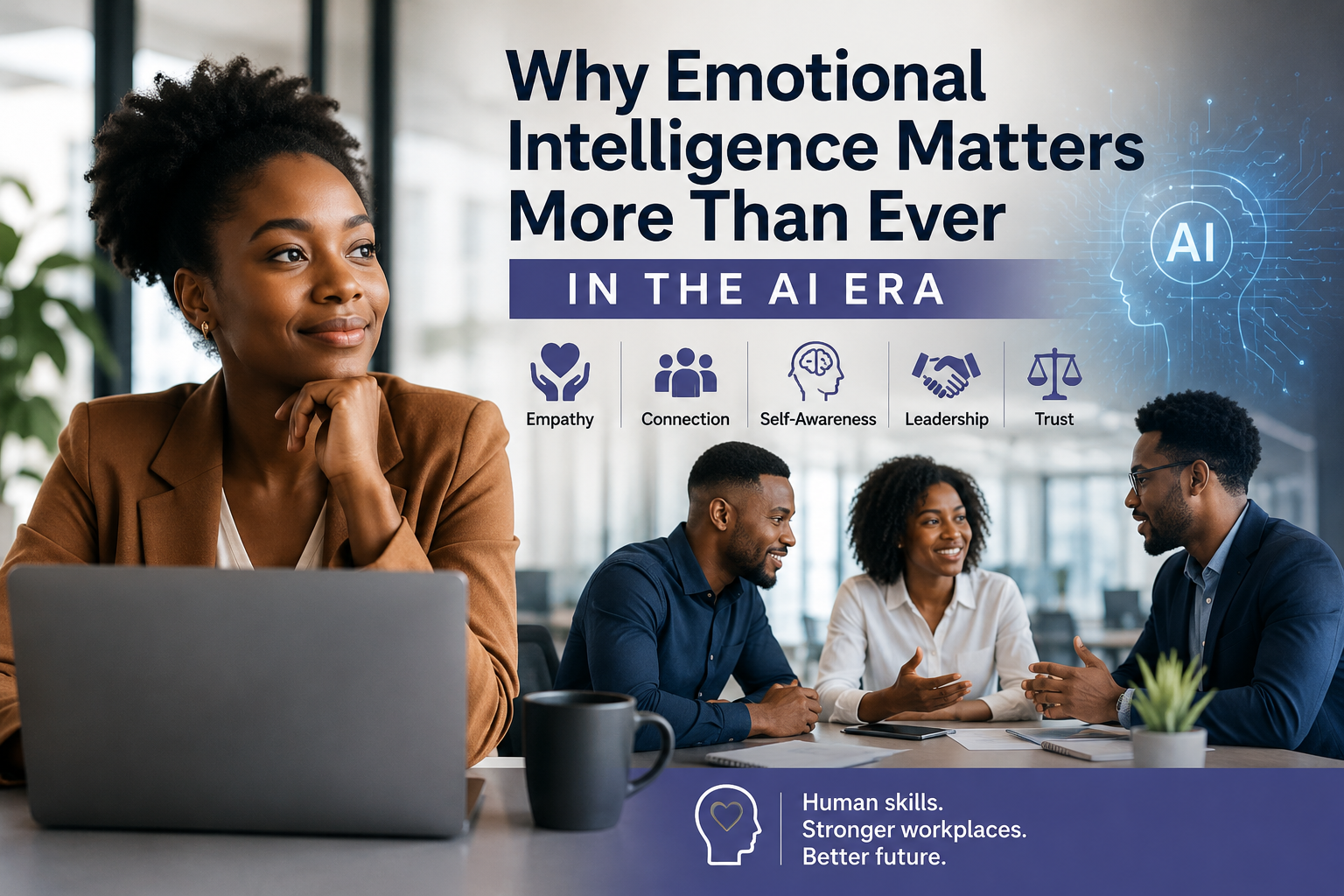

AI can write your emails, summarize your meetings, and predict your next move before you have even thought of it.
So why are the most sought-after professionals still the ones who know how to read the room?
Even though technology is getting faster, people are still people.
We still want to feel understood.
We still do our best work when we feel valued.
And we still follow leaders who make us feel like more than just a job title on a spreadsheet.
That is what emotional intelligence is all about.
It is the ability to notice, understand, and manage your own and other people’s emotions.
And in 2026, it is one of the most powerful skills you can have. Not because it sounds good on a LinkedIn profile, but because it works.
This article breaks down why emotional intelligence in the workplace matters more than ever and how to use it to get ahead.
Humans Are Wired for Connection, Belonging, and Understanding
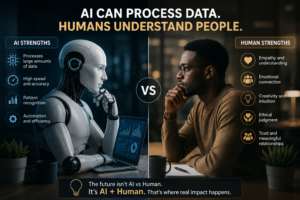
Let’s start with something that has not changed no matter how many apps we build: people need people.
Think about the last time you felt truly heard at work.
Maybe a manager noticed you seemed off before you said a word. Maybe a colleague checked in after a rough week without being asked.
Those small moments stick with us because they meet the need to belong, to matter, and to be understood.
AI cannot give you that. It can mimic the words, but it cannot feel the weight behind them.
That is where emotional intelligence comes in.
When you can pick up on what someone is feeling, respond with genuine care, and build trust over time, you become the kind of person people want on their team, in their corner, and across the table from them.
Emotional Intelligence Fills the Gaps That Technology Cannot
AI is genuinely impressive.
It can crunch data, spot trends, write reports, and automate tasks that used to take hours.
We are not here to argue with that. But it cannot understand why your star employee suddenly seems checked out.
Figure out that a client’s frustration is not about the deadline but about feeling like they are not being taken seriously.
Know when to push, when to hold back, and when someone just needs someone to say, “I see you.” That is not a technology gap.
That is a human gap. And emotional intelligence is what bridges it.
The table below shows how this plays out in real situations:
| The Situation | What AI Can Handle | What Only You Can Do |
| An employee goes quiet and disengaged | Flag the drop in output | Notice the shift, ask the right question, and actually listen |
| A client is unhappy with a deliverable | Analyze feedback patterns | Read between the lines, apologize with feeling, rebuild trust |
| Your team is overwhelmed and losing steam | Track tasks and deadlines | Sense the mood, adjust the pace, remind people why it matters |
| A tough performance conversation | Pull data on results | Deliver feedback that challenges without crushing confidence |
| Conflict between two colleagues | Detect communication patterns | Sit with both people, mediate fairly, and move forward together |
The pattern is clear. AI handles the data. You handle the people.
And handling people well is a skill no software update can replace.
Success Depends on More Than Technical Competence
Picture two people going for the same promotion.
Same skills. Same results. Same years of experience.
One of them is brilliant but hard to work with. Meetings with them feel tense. Their feedback stings. People avoid bringing problems to them because the response is rarely worth it.
The other one is just as sharp, but people genuinely enjoy working with them. They communicate clearly. They handle conflict without drama. They make others feel capable rather than small.
Who gets the role? Nine times out of ten, it is the second person.
This is the importance of emotional intelligence in career growth, and it is playing out in workplaces.
Organizations that invest in emotional intelligence training are strengthening communication, collaboration, leadership, and workplace culture.
Through workplace wellness and leadership training, teams can develop practical emotional intelligence skills that improve both employee wellbeing and organizational performance.
The Ability to Manage Emotions Is Becoming a Competitive Advantage

Work in 2026 is a lot.
There is more information coming at you than any human brain was designed to handle.
The pace of change is relentless.
And the pressure to stay on top of it all while still showing up as a good colleague, leader, or team player?
That is genuinely hard.
This is exactly why emotional intelligence, specifically the ability to manage your own emotions, is becoming a real competitive edge. For instance:
- Staying steady when things get shaky: When a project falls apart or a client walks, the person who can take a breath, assess the situation, and move forward without spiraling is the person everyone else looks to. That is emotional regulation in action.
- Making better decisions under pressure: Panic makes us reactive while staying calm makes us think clearly. Emotional intelligence skills help you slow down your response just enough to choose wisely instead of just choosing fast.
- Not burning out: People with higher emotional intelligence tend to set better boundaries, ask for help earlier, and recover from setbacks more quickly.
For some employees, managing emotions becomes especially difficult when stress, burnout, anxiety, or personal challenges begin to take a toll.
In these situations, one-on-one or group therapy can provide support, helping individuals build healthier coping strategies, strengthen resilience, and navigate workplace pressures more effectively.
Trust and Influence Cannot Be Automated
Who have you worked hardest for in your career? Chances are, it was not the manager with the most impressive title.
It was the one who remembered your name when you were new, gave you honest feedback when you needed it, and defended you when it mattered.
It was the person who made you feel like your work and your wellbeing counted for something. That is emotional intelligence for leaders at work.
And it creates something that no piece of technology can manufacture: trust.
Trust is what makes people follow you, buy from you, stay with you, and give you their best effort.
In an age where so much interaction is being handed off to AI, the professionals and organizations that still show up with real warmth and real credibility will stand out more.
People are getting better at sensing when something is transactional versus when it is real.
Emotional intelligence is what makes the difference. At the end of the day, it is not about being the nicest person in the room. It is about being the most trusted.
And trust, in the AI era, is the most valuable thing you can build.
Building Emotional Intelligence for a Healthier Workplace
Emotional intelligence is becoming more valuable because people remain at the heart of every workplace.
While AI can automate tasks and improve efficiency, it cannot replace empathy, trust, resilience, or meaningful human connection.
At Mental Health Wellness Kenya, we help organizations strengthen these skills through workplace wellness training, leadership development programs, and psychological support services.
We also offer one-on-one therapy for employees experiencing stress, burnout, anxiety, and other mental health challenges, helping individuals and teams thrive in today's changing workplace.
Book an appointment with us today.